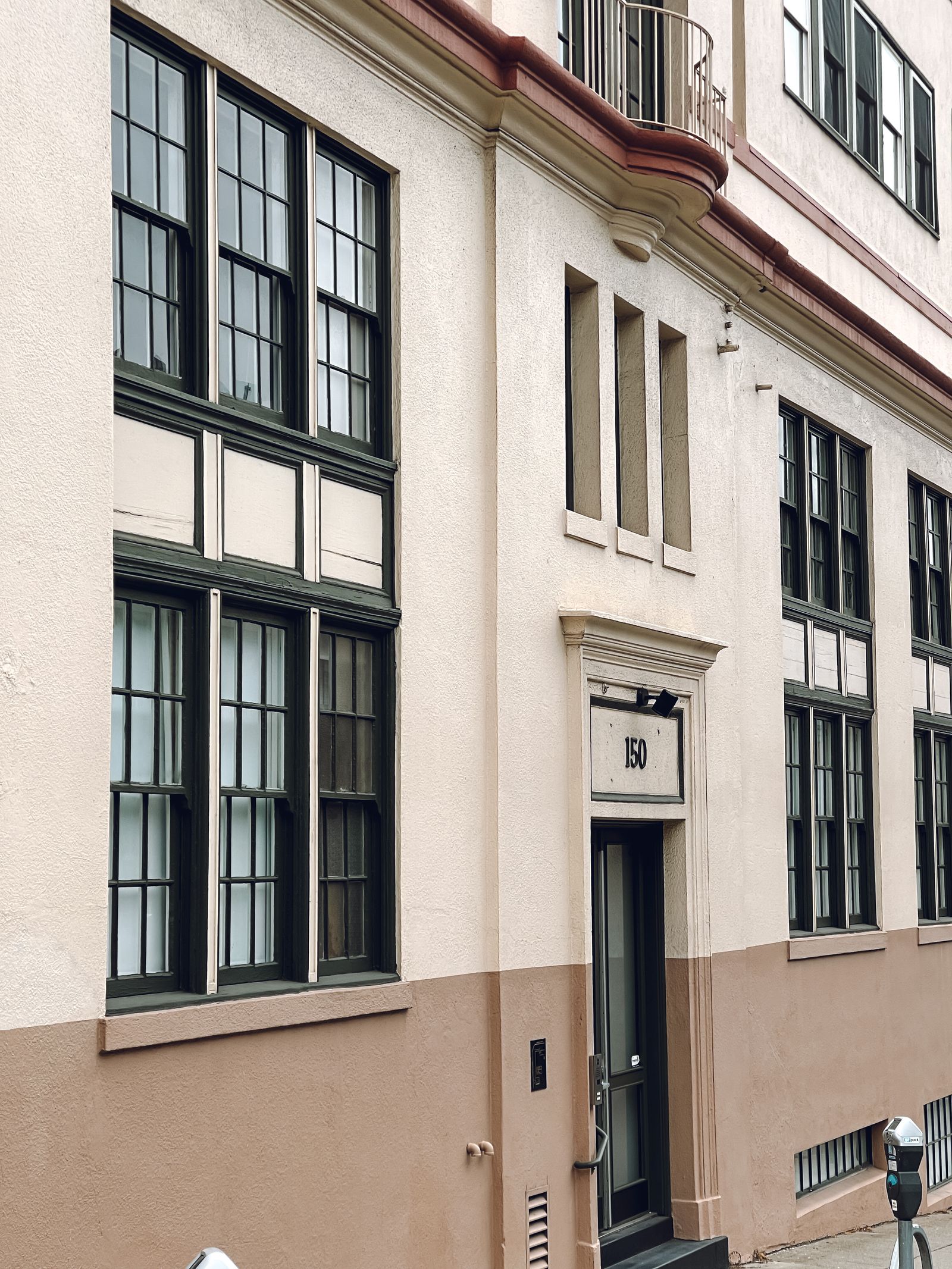
Read the Las Vegas facade before choosing the wash
Las Vegas commercial exteriors commonly combine stucco, painted block, precast or tilt-up concrete, brick, stone accents, EIFS, metal panels, storefront glass, canopies, signs, louvers, and roof-edge details. A hospitality property may pair a tall guest-facing facade with decorative entries, pool-adjacent surfaces, loading access, and guest routes. A medical building may have sensitive glazing, air intakes, patient drop-off, and limited work windows. Retail centers often add monument signs, tenant doors, parking lanes, landscaping, and delivery activity. Industrial and warehouse properties may have broad panels, truck courts, dock doors, equipment screens, and more concentrated dust at lower elevations.
Soft washing may fit compatible organic growth, bird residue, light biological staining, and atmospheric film when the material and condition support the process. It is not a repair for cracked stucco, failed sealants, open joints, spalled concrete, loose coatings, corrosion, active leaks, or damaged glass. A dark band can be dust, exhaust, oxidation, mineral scale, irrigation residue, or a recurring drainage mark. A white haze may be hard-water deposits or efflorescence rather than soil. A representative test area and dry-down review can establish likely improvement before a full elevation is scheduled, with specialty treatment and repair kept separate.
- Separate stucco, block, masonry, concrete, stone, glass, metal, painted, and coated zones.
- Identify desert dust, traffic film, bird residue, mineral deposits, oxidation, irrigation spotting, and organic growth.
- Define whether the goal is a guest-ready entry, leasing presentation, tenant turnover, or recurring maintenance.
- Keep glass polishing, hard-water removal, coating work, leak diagnosis, and repairs outside routine washing.
Plan around the Strip, Downtown, Summerlin, and Henderson-adjacent properties
The Las Vegas Strip is a hospitality and retail environment with guest arrivals, pedestrian movement, rideshare activity, tour buses, valet lanes, restaurant patios, event schedules, deliveries, security checkpoints, and service corridors behind the public frontage. Cleaning may need to be divided by elevation or entrance, coordinated with facilities and security, and scheduled around the property calendar. This is a planning context, not a claim of any contract or access to a particular resort. The address, property contact, and approved work zone control what can actually be scheduled.
Downtown Las Vegas and the Fremont Street area can put storefronts, hotels, restaurants, offices, apartments, sidewalks, events, and loading activity close together. Summerlin and the west valley add office campuses, medical buildings, retail centers, schools, and landscaped properties where customer or employee circulation matters. Henderson-adjacent areas and the southeast valley include healthcare, distribution, manufacturing, retail, and warehouse properties with truck courts, gates, shift changes, and broader staging but still no assumption of open access. A quote should name the entrances, accessible paths, loading areas, parking limits, security rules, and blackout dates that affect the sequence.
Account for sun, heat, wind, dust, and mineral deposits
Fine desert dust can settle on parapets, textured stucco, window frames, sign bands, ledges, roof screens, canopies, and equipment enclosures, then move back onto a cleaned surface when wind increases. Intense sun and high surface temperatures can shorten dwell time or dry chemistry unevenly. A shaded arcade, a north-facing wall, and a west-facing metal panel may behave differently on the same day. Heat also affects the crew, public routes, hose handling, and the time available for a controlled rinse. Weather and surface conditions should be checked during the work window rather than assumed from a calendar date.
Las Vegas water quality and irrigation can leave white spotting, scale, and mineral lines on glass, metal, masonry, and painted surfaces. Hard-water deposits are not automatically removed by a routine soft wash, and stronger pressure can leave glass, coatings, joints, or adjacent finishes worse. A dark mark below a cooling discharge, roof edge, scupper, irrigation line, or failed joint may return if the source remains. Cleaning can improve appearance while the property team separately investigates the source. The proposal should say what is expected to improve and what may need specialty treatment or another trade.
Wind can change spray drift, dust loading, hose control, and aerial feasibility. Heat, gusts, lightning, rain, poor visibility, or an unsafe wet surface should be defined as pause or reschedule conditions. A drought-aware plan should use only the water needed for the approved result, identify the water source, avoid uncontrolled discharge, and account for landscaping and downstream flow before rinsing begins. Water planning is part of the scope, not a detail left until the last wall is wet.
Match access and aerial assistance to the site
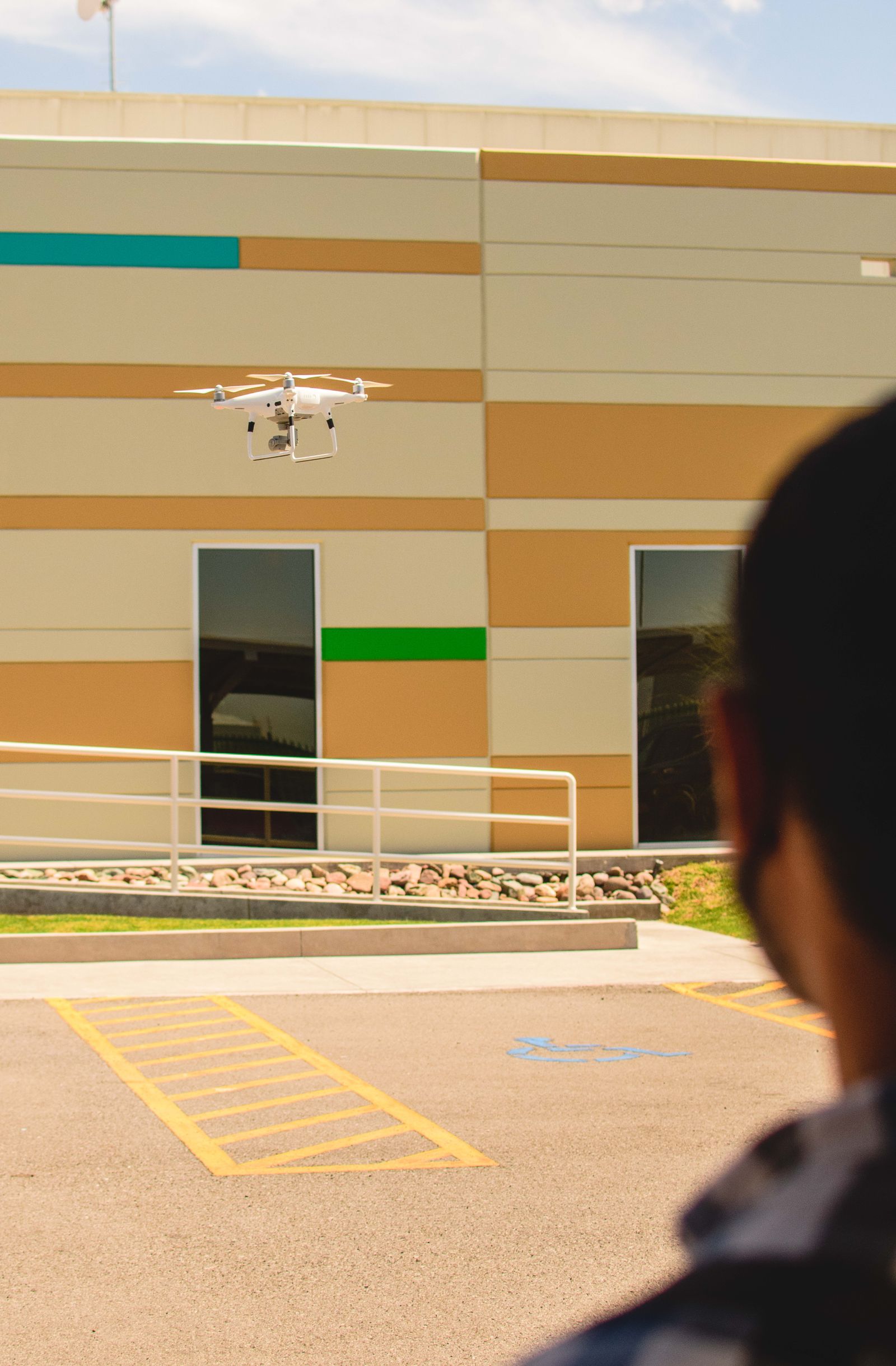
Drone-assisted application or rinsing may support a broad, compatible upper elevation when there is a suitable launch and recovery area, workable stand-off distance, visual control, manageable wind, hose planning, and a protected ground perimeter. It may reduce some lift repositioning on an open hotel, office, retail, or warehouse facade. It does not replace close glass cleaning, mineral treatment, hand detailing, condition assessment, or repair work. The quote should identify the aerial zones and the ground, pole, lift, roof-access, or hand work that remains.
Las Vegas properties can include airport-related airspace, rooftop equipment, utilities, palms, balconies, narrow sidewalks, neighboring buildings, parking structures, active roads, and controlled hospitality or medical areas. Commercial drone operations must follow applicable Federal Aviation Administration requirements; property permission does not replace aviation rules or site controls. If wind, airspace, obstacles, public movement, or the ground zone cannot be controlled, a water-fed pole, lift, ground crew, hand detail, hybrid method, or rescheduled window may be more appropriate. Height alone does not select the method.
Protect water, runoff, people, and operating property
Before applying chemistry or rinse water, map doors, accessible routes, guest and employee paths, air intakes, cameras, signs, lighting, vehicles, landscaping, pool or water features, low points, catch basins, hose crossings, neighboring parcels, and service corridors. A hotel may need a quiet handback at a porte cochere. A medical property may need patient routes and emergency access protected. A retailer may need customer parking and tenant entrances kept clear. An industrial property may need delivery, security, forklift, and shift coordination. Barriers, spotters, communication, and a pause authority should be agreed before setup.
Las Vegas properties may drain toward curb inlets, landscaped basins, parking structures, detention features, washes, or shared drive lanes. A storm drain is not automatic permission to send wash water into it. Product, soil load, rinse volume, slope, water source, and discharge route all matter. Depending on site requirements and the work, controls may include diversion, collection, recovery, filtration, reduced rinse volume, plant protection, disposal, or coordination with the responsible authority. The proposal should state assumptions and the response if observed water movement differs from the initial review.
- Locate drains, low points, landscaping, air intakes, public routes, service corridors, and emergency access.
- Confirm water access, hose routing, shade, heat controls, guest or patient circulation, and handback timing.
- Set pause triggers for wind, heat, lightning, rain, visibility, dust, unsafe surfaces, and changed runoff.
- Photograph completed elevations and record mineral deposits, repairs, or specialty work left outside scope.
Request a Las Vegas quote tied to the building
A useful proposal should map priority elevations and state the material, visible soil, planned method, access, water assumptions, runoff controls, protection, work hours, weather limits, exclusions, and closeout standard. Broad facade washing should be distinguished from glass polishing, hard-water treatment, oxidation, graffiti, construction residue, coating work, masonry repair, and envelope investigation. If aerial assistance is proposed, the scope should name the launch area, aerial zones, ground controls, and fallback method if wind or airspace changes.
Send the Las Vegas address, wide and close photos, approximate height, facade materials, problem elevations, desired finish, preferred dates, water access, nearby drains, service-corridor limits, and guest, tenant, patient, customer, delivery, security, or event restrictions. Mention whether the property is hospitality, retail, medical, office, industrial, warehouse, or mixed-use. Call +1 239-351-2897, email contact@dronebuildingcleaners.com, or use the existing quote/contact CTA. Drone Building Cleaners can explain what the selected process is intended to improve, what may remain, and which conditions should be referred to another professional before scheduling.